
📁 CASE FILE – The Spine and the Screen

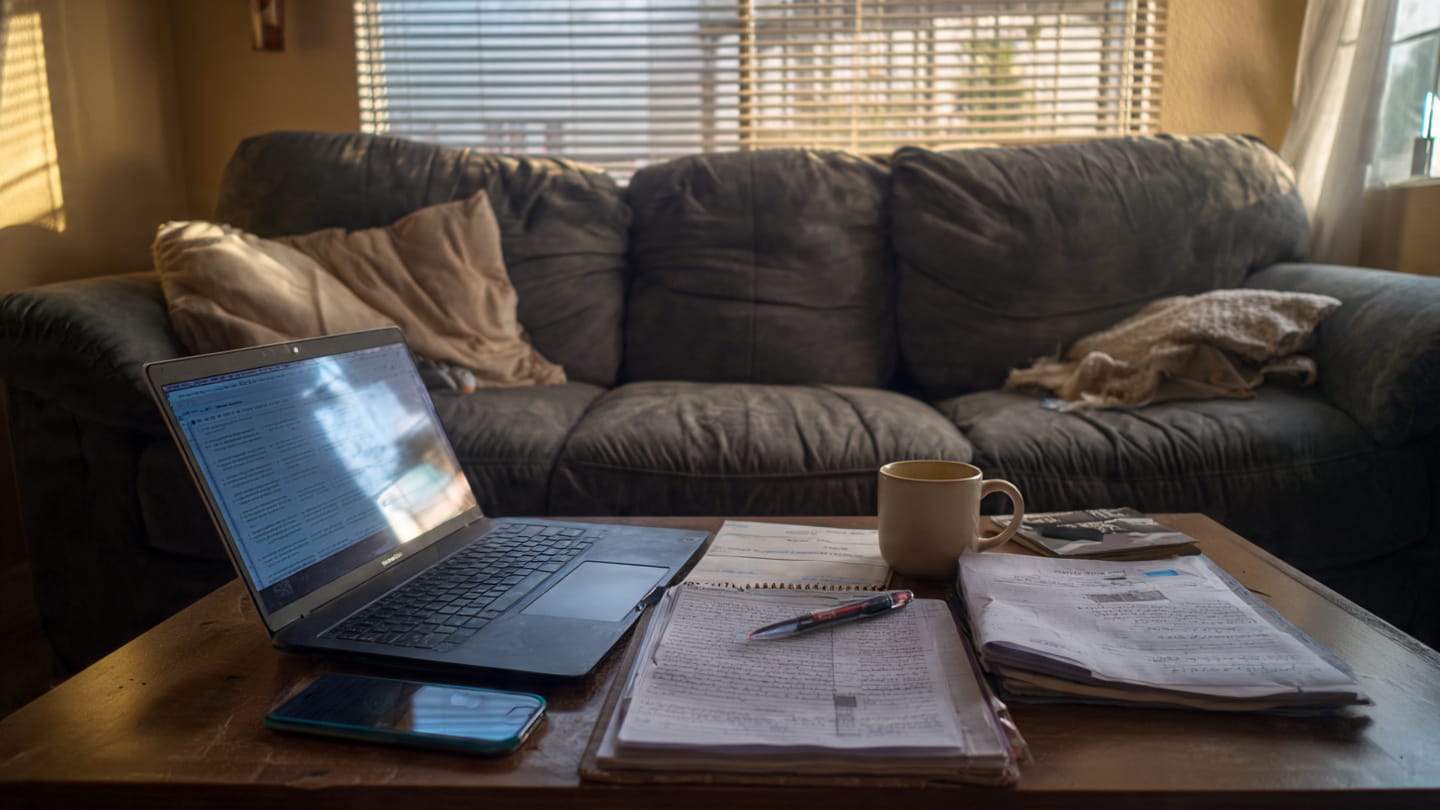
Filed under: Sitting Ducks
At 10:42 a.m. your spine is already done with today.
Fourth call. Same chair. Same angle. Same quiet throb at the base of your neck.
You stand up to refill your coffee and your lower back answers before your mouth does.
No fall.
No gym injury.
Just another “normal” American workday in 2026: 7+ hours in a chair, laptop glow as your main light source.
🪑 Field Notes: The 7‑Hour Sit
The job titles change. The posture doesn’t.
- UX designer in Denver, “WFH” from a barstool and kitchen island.
- Claims processor in New Jersey, headset on, bathroom breaks approved by a dashboard.
- High‑school teacher in LA, grading on a couch after school, then collapsing into a doom‑scroll.
By evening, the same chorus:
- Low‑back ache that “wasn’t there ten years ago.”
- Neck and upper‑back tightness that “just comes with the job.”
- Bladder that suddenly feels urgent on the drive home, or leaks a little when you sneeze.
On the outside, it looks like “everybody’s a little stiff.”
On the inside, it looks like tissues adapting to a shape you never meant to live in.
💽 Pattern File: What Sitting Really Does
Seven‑plus hours of sitting a day isn’t just “bad posture.”
It’s a mechanical, vascular, and nervous‑system environment.
- Spine & discs
- Slumped sitting increases pressure on lumbar discs compared with standing, especially when you don’t shift much, and is consistently linked with more low‑back pain.
- Hips & core
- Hip flexors shorten, glutes under‑recruit, deep core idles. When you finally stand, your back picks up work your hips and abs aren’t doing, so every move feels like a back exercise.
- Pelvic floor & bladder
- Long, static sitting reduces blood flow and loads the pelvic floor; population data now tie higher daily sitting time to more urinary incontinence, especially in women.
- Layer on “I’ll pee after this meeting” as a habit, and you get urgency, leaks with coughing, or that “I have to go right now” feeling much earlier than you used to.
- Nervous system
- Less movement input = a system that becomes more sensitive to pain and less confident in movement. The longer you sit, the more your brain tags normal motion as “risky.”
No single dramatic moment.
Just slow, structural permission for your body to hurt.
🕵️ Lifestyle Accomplices
Repeat offenders in this case file:
- Endless video calls with “we’ll keep this brief” energy that never is.
- Makeshift offices: kitchen chairs, barstools, sofas, beds doing a job they were never built for.
- Commutes that bookend the sitting — car, subway, bus — so your spine never gets real variety.
- Phone posture: head forward, shoulders rounded, scrolling through “ergonomic tips” while your own cervical spine protests.
- Bladder deferrals: staying muted and seated through the urge because you don’t want to “drop off the call.”
Individually, each looks harmless.
Together, they’re an all‑day load on your spine and pelvic floor.
🧠 Behind the Chart
When someone says:
- “My back just hurts when I get up after work.”
- “I leak a little when I laugh, but it’s not bad enough to see anyone.”
- “My posture’s trash. That’s just who I am now.”
The underlying pattern often looks like:
- Stiff thoracic and lumbar segments.
- Weak glutes and deep core with overworked paraspinal muscles.
- Pelvic‑floor dysfunction — either over‑tense and tired or under‑supportive — both linked to back pain and incontinence.
- A nervous system that has started to tag simple movement as threat because your default is static.
The WHO now flags sedentary time itself as an independent risk factor: you can “hit your steps” and still live most of your waking hours in a sedentary spine.
Your body doesn’t need a $1,500 chair or a perfect setup.
It needs interruptions, variety, and permission to move.
🗂️ Closing Statement
If your workday happens between screen and chair.
If your back, neck, or bladder have become running jokes you don’t actually find funny.
If your reflection surprises you with a posture your pain already knows too well.
That’s not “just getting older.”
That’s a long exposure your body has been carefully documenting.
This file stays open.
Tess Marlowe 👩🏻⚕️🕵🏻♀️